Frame 11
Group 2
Group 3

TMS Therapy for
Insomnia: A Non-Invasive Treatment Option

Struggling with insomnia can affect every part of daily life, from focus and mood to overall health, leaving many patients frustrated after medications or behavioral therapies fail to provide lasting relief. TMS therapy offers a non-invasive, drug-free option for individuals concerned about chronic sleeplessness, medication side effects, dependency, or insomnia linked to underlying mental health conditions, such as depression or anxiety. By gently stimulating targeted brain regions involved in sleep regulation, TMS therapy may help restore healthier sleep patterns and improve overall well-being.

Our online directory makes it easy to explore this innovative treatment by connecting patients with qualified TMS providers in their region, helping you find care that’s accessible, personalized, and close to home.

TMS Therapy for Insomnia: A Non-Invasive Treatment Option

Struggling with insomnia can affect every part of daily life, from focus and mood to overall health, leaving many patients frustrated after medications or behavioral therapies fail to provide lasting relief. TMS therapy offers a non-invasive, drug-free option for individuals concerned about chronic sleeplessness, medication side effects, dependency, or insomnia linked to underlying mental health conditions, such as depression or anxiety. By gently stimulating targeted brain regions involved in sleep regulation, TMS therapy may help restore healthier sleep patterns and improve overall well-being.

Our online directory makes it easy to explore this innovative treatment by connecting patients with qualified TMS providers in their region, helping you find care that’s accessible, personalized, and close to home.

What Is TMS Therapy?

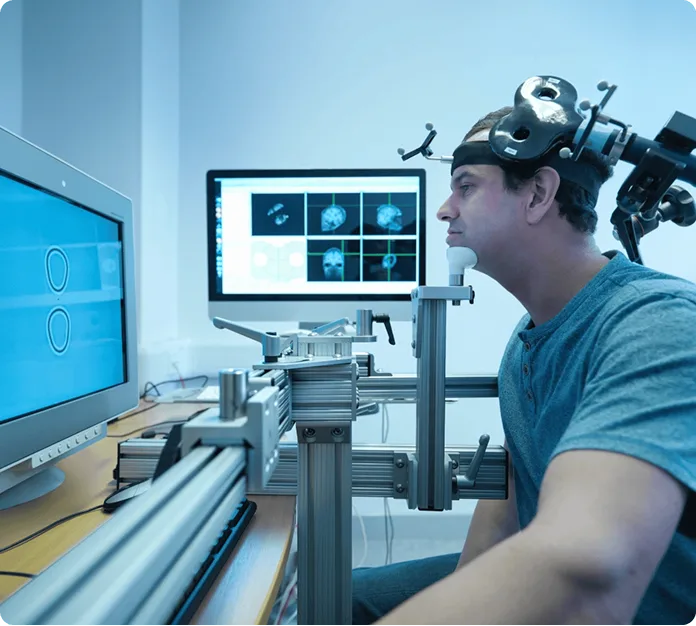
Transcranial magnetic stimulation (TMS) therapy is a non-invasive medical treatment that uses focused magnetic pulses to stimulate specific areas of the brain involved in mood, sleep regulation, and neural activity. The procedure is performed in an outpatient setting, does not require anesthesia, and allows patients to remain awake and return to normal activities immediately after each session. TMS is FDA-cleared for certain mental health conditions and is being increasingly explored for insomnia, particularly when sleep difficulties are connected to underlying brain circuit dysfunction.
Is TMS Effective for Insomnia Treatment?

Research into TMS therapy for insomnia suggests promising results, particularly for patients whose sleep difficulties are linked to brain activity patterns rather than purely behavioral causes. Studies indicate that targeted magnetic stimulation may help regulate neural circuits involved in sleep onset and maintenance, potentially improving REM sleep and increasing slow-wave activity, both of which are essential for deep, restorative rest. By supporting healthier brain signaling, TMS may contribute to more consistent restorative sleep cycles and reduced nighttime awakenings. While outcomes can vary and insomnia may also coexist with other sleep disorders, many patients pursue TMS as an option when traditional treatments have not provided sufficient relief.

TMS for Insomnia: A Step-by-Step Procedure

The process begins with a comprehensive consultation with a qualified TMS provider. During this visit, the clinician reviews the patient’s sleep history, current symptoms, prior treatments, and any underlying conditions that may contribute to insomnia. This step helps determine whether TMS is an appropriate option and allows the provider to tailor the treatment approach based on the patient’s specific concerns and clinical profile.

Once a patient is approved for treatment, a brain mapping session is conducted to identify the precise stimulation target. This involves determining the optimal placement of the TMS coil on the scalp and establishing the correct stimulation intensity. Mapping ensures that magnetic pulses are delivered accurately and consistently to brain regions associated with sleep regulation and to neural activity patterns linked to insomnia.
During each TMS session, the patient sits comfortably in a chair while a specialized coil is positioned against the scalp. The device delivers rhythmic magnetic pulses that pass painlessly through the skull to stimulate targeted brain regions. Sessions typically last between 3 and 40 minutes, and patients remain fully awake and alert throughout the procedure. No sedation or anesthesia is required.
TMS therapy is administered over a series of sessions, commonly scheduled five days per week for several weeks. This repeated stimulation is intended to gradually influence brain activity and promote healthier sleep-related neural patterns. The schedule is structured to build cumulative effects over time rather than relying on a single treatment session.
Throughout treatment, clinicians regularly monitor patient feedback and symptom changes. Adjustments to stimulation intensity or coil positioning may be made as needed to maintain accuracy and comfort. This ongoing oversight ensures that the procedure remains personalized and aligned with the patient’s response to therapy.

Recovery & Side Effects

Recovery after TMS therapy for insomnia is minimal, as the procedure is non-invasive and does not involve anesthesia or sedation. Most patients can resume normal daily activities immediately after each session, including work or school. Side effects are generally mild and temporary, with the most common being scalp discomfort, tingling sensations at the treatment site, or a mild headache during or shortly after sessions. These effects typically lessen as treatment progresses and can be managed by adjusting stimulation settings as needed. Serious side effects are rare, and providers closely monitor patients throughout treatment to ensure comfort and safety.


Candidates for TMS Therapy
for Insomnia

Candidates for TMS therapy for insomnia often include individuals whose symptoms persist despite lifestyle changes or conventional treatments and whose conditions affect sleep quality and daily functioning. This may include patients with underlying neurological or mental health conditions, a history of traumatic brain injury, or those who cannot tolerate or do not benefit from sleep medications. TMS may be considered for people who struggle to fall asleep, experience frequent nighttime awakenings, or have insomnia connected to coexisting conditions, such as restless legs syndrome. Because insomnia can present differently across patients, providers carefully evaluate individuals to determine whether they fit appropriate treatment groups and are likely to benefit from targeted brain stimulation.

Benefits of TMS Therapy for Insomnia

Cost of TMS Therapy for
Insomnia in the U.S.

In the U.S., the cost of TMS therapy for insomnia typically ranges from $100 to $300 for a session when paying out of pocket. Total costs can vary based on the number of treatments recommended, provider location, and clinic pricing structure. Insurance coverage may reduce out-of-pocket expenses, but coverage for insomnia-related TMS can vary and often requires prior authorization.

Find a Qualified TMS Provider in Your Area

If you’re exploring TMS therapy to help improve poor sleep habits, address insomnia tied to mental health issues, or support deep sleep, our online directory makes it easy to find qualified providers near you.
TMS Therapy Near Me connects you with a comprehensive, up-to-date database of trusted TMS clinics and specialists across the U.S., allowing you to search by location, treatment focus, and patient reviews. Whether you’re just beginning your journey or ready to schedule a consultation, our resource helps you quickly identify local professionals experienced in using TMS therapy to target the brain patterns that contribute to persistent sleep difficulties.

Frequently Asked Questions (FAQ)

TMS treatment has shown promise in promoting sleep improvements, including better sleep duration and overall restfulness. Research in sleep science suggests that targeting specific brain regions with TMS can influence neural circuits involved in sleep regulation. While individual results vary, many patients report measurable enhancements in sleep patterns following consistent TMS sessions.
Primary chronic insomnia is a persistent sleep disorder not directly caused by another medical or psychiatric condition. Individuals with primary insomnia often experience difficulty falling or staying asleep, leading to insufficient rest and impaired daytime functioning. Sleep disruptions can affect all stages of the sleep cycle, including rapid eye movement, which is essential for restorative rest.
The Pittsburgh Sleep Quality Index (PSQI) is a widely used tool for assessing sleep quality and identifying issues that may require intervention. Clinicians often use it to help diagnose sleep disorders and to track the effectiveness of treatments designed to treat insomnia. The PSQI evaluates several dimensions of sleep, including sleep latency, or the amount of time it takes to fall asleep, making it useful for monitoring therapy progress.
In repetitive transcranial magnetic stimulation (rTMS) treatment, magnetic fields are delivered to the dorsolateral prefrontal cortex to influence the activity of nerve cells in this region. Stimulating these brain areas can produce sleep changes and improve neural signaling associated with both sleep regulation and mood. The prefrontal cortex is targeted because studies indicate that activity here correlates with treatment response, making it a key region for effective TMS therapy.
Yes, TMS for insomnia has been evaluated in sleep medicine through systematic reviews and meta-analyses. These studies often include control groups to compare outcomes, and results have shown statistically significant improvements in sleep quality, duration, and efficiency. TMS offers a drug-free treatment option that can complement or be considered alongside traditional behavioral approaches for patients struggling with persistent insomnia.
TMS can be an effective intervention for patients diagnosed with major depressive disorder, particularly those experiencing sleep problems alongside mood disorders. By targeting relevant brain regions, TMS may help improve both depressive symptoms and sleep disturbances. It is also evaluated in patients with conditions listed in the Diagnostic and Statistical Manual of Mental Disorders (DSM-5), and while primarily studied for depression, research is expanding to consider coexisting sleep issues in patients with bipolar disorder and other mood-related conditions.

Enhance Your Mental Health Today!

Sleep disturbance is a common and often overlooked factor that can worsen mental health disorders, affecting mood, focus, and overall quality of life. Addressing sleep problems with therapies like TMS not only supports better rest but can also help improve underlying brain activity associated with these conditions. By targeting the neural circuits that contribute to both insomnia and mood regulation, TMS offers a non-invasive, drug-free approach for those looking to enhance their mental well-being and take proactive steps toward healthier, more restorative sleep.