Frequently Asked Questions
What does TMS therapy treat?
This innovative mental health treatment has been FDA-approved to treat a number of conditions, and ongoing research efforts are underway to investigate its effectiveness in treating other conditions as well. TMS therapy may be helpful in treating: Depression OCD Anxiety PTSD Depression Major Depressive Disorder is one of the most common mental health conditions worldwide. Even so, finding the right treatment or combination of treatments to adequately address depression symptoms may be a challenge. As many as two-thirds of people seeking treatment for depression do not achieve adequate relief from the first medication they are prescribed. TMS therapy is an FDA-approved therapy for treatment-resistant depression. Dozens of studies have recommended TMS therapy as a safe and effective treatment option for depression. NeuroStar Advanced Therapy, one of the leading providers in TMS technology, estimates that 7 in 10 patients respond to TMS therapy for depression, with 5 in 10 patients achieving full remission of their depression symptoms. Learn more about depression causes, symptoms, and treatments >> OCD TMS therapy has also been studied extensively as a treatment for Obsessive Compulsive Disorder (OCD). The FDA approved TMS therapy as a safe and effective treatment for OCD in 2018. Studies have found that 72% of individuals with OCD respond to TMS treatment, with 52% achieving lasting relief from symptoms. Learn more about OCD causes, symptoms, and treatments >> Anxiety TMS therapy may also provide relief of anxiety symptoms. As of 2021, the FDA has cleared TMS therapy for the treatment of Anxious Depression, or depression with comorbid anxiety.
What are common side effects of TMS therapy?
Many mental health treatments come with a variety of side effects. One of the factors that makes TMS therapy an attractive option for people seeking mental health treatment is that the side effects of TMS therapy are typically mild, particularly compared to other medication-based mental health treatments. Common side effects of TMS therapy include: Headache Scalp discomfort at the site of stimulation Tingling facial muscles Lightheadedness
How effective is TMS therapy?
TMS therapy is a safe and effective treatment option for a number of mental health conditions. Studies suggest that approximately 7 in 10 patients respond to TMS therapy, and 5 in 10 patients are able to achieve long-lasting relief from their symptoms. Research on the efficacy of TMS therapy as a treatment for different conditions is ongoing.
What happens during a TMS therapy session?
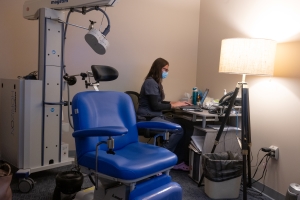
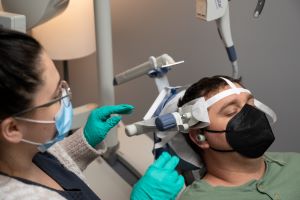
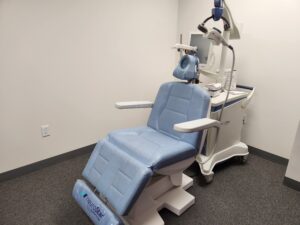
Before beginning TMS treatment, a doctor will screen your overall health as well as develop a treatment plan. A typical TMS treatment plan may include in-office TMS treatment 5 days a week for 4-6 weeks. Individual TMS treatment sessions last from 19-37 minutes. Before your TMS session, you will check in with office staff. In the exam room, you will recline in a comfortable treatment chair as the small, curved magnetic coil used to administer TMS therapy is placed against your head. During TMS therapy, you will receive focused magnetic stimulation to the target areas of your brain. You will hear a clicking sound and may feel a light tapping against your head during the session, but this should not be painful. After TMS therapy, you can be on your way and resume your normal daily activities. TMS does not affect your memory or alertness, so it’s safe to drive yourself home.