



Who Can
Administer TMS?
Transcranial magnetic stimulation (TMS) is a non-invasive, FDA-approved therapy that utilizes an electromagnetic field to stimulate targeted brain areas. It is used to treat major depressive disorder (MDD) or clinical depression and obsessive-compulsive disorder in patients who have not responded to traditional treatments.
Who Can
Administer TMS?
Transcranial magnetic stimulation (TMS) is a non-invasive, FDA-approved therapy that utilizes an electromagnetic field to stimulate targeted brain areas. It is used to treat major depressive disorder (MDD) or clinical depression and obsessive-compulsive disorder in patients who have not responded to traditional treatments.
Who Is Qualified to Administer TMS?
Quick answer: A licensed physician, most often a psychiatrist, prescribes and oversees TMS therapy. The daily sessions are usually delivered by a trained TMS technician, nurse, physician assistant or nurse practitioner working under that physician’s supervision. Exactly who may run the machine depends on state rules and on the training the clinic requires.
Psychiatrists
Neurologists
Other Physicians
Physician Assistants
Nurse Practitioners
Prescribing Clinical Psychologists
Types of TMS Certifications
Requirements for Certification and Maintaining Certification

How to Become a TMS Technician
A TMS technician is the person most patients see at their daily sessions. After the physician sets the treatment plan, the technician seats the patient, places the coil in the mapped position, runs the session and records how the patient is doing. In most states there is no separate government license for TMS technicians, so the supervising physician and the clinic’s own training standards decide who may deliver treatment.
The Typical Path to TMS Technician Certification
- A healthcare background. Many technicians come from medical assistant, nursing, psychiatric technician or psychology roles, and clinics usually ask for current CPR or Basic Life Support certification.
- Device training. The maker of the clinic’s TMS system trains staff on that machine, its coil and its treatment protocols. Learn more about the different TMS devices.
- A technician course. Training providers such as Solstice Training Institute offer TMS technician courses on safety, coil placement and protocols that end in a certificate.
- Supervised practice. New technicians deliver treatments under an experienced clinician before working on their own, then keep up with continuing education as protocols change.
Who Prescribes TMS and Who Delivers It?
A licensed physician, usually a psychiatrist, evaluates the patient, confirms that TMS is appropriate, finds the motor threshold that sets the treatment strength and writes the plan. TMS devices are labeled for use under a physician’s supervision, so the doctor stays responsible for the whole course and is available if a problem comes up, while a trained technician delivers the day-to-day sessions. In some states, nurse practitioners and physician assistants take on parts of the physician’s role.
FDA-cleared uses now include major depression, obsessive-compulsive disorder, smoking cessation and anxiety symptoms that come with depression, and in 2024 one system was cleared for depression in teens aged 15 and older. Not sure if TMS fits you? Read who is a candidate for TMS therapy.
Questions to Ask a TMS Clinic
- Who is the supervising physician, and are they on site during sessions?
- Who will deliver my daily sessions, and what training and certification do they have?
- Which TMS device and protocol will you use for my condition?
- Will my plan cover treatment? Our TMS insurance guide explains what most insurers ask for.
- What will a typical session be like? See what to expect during TMS.
You can compare clinics and their providers in our TMS clinic directory or search for TMS clinics near you.
FAQs Regarding TMS Administration
Is TMS a Noninvasive Treatment Option?
TMS is a noninvasive treatment option for certain neurological and psychiatric disorders. It involves sending a magnetic pulse, generated by a coil placed over the scalp, into parts of the brain associated with the condition being treated. The magnetic energy stimulates nerve cells, leading to beneficial changes in an individual’s neural activity.
What Mental Health Conditions Can Be Treated With TMS?
Repetitive transcranial magnetic stimulation is used to treat several mental health conditions. It is currently FDA-approved for major depression and obsessive-compulsive disorder. Additionally, deep transcranial magnetic stimulation has been used to effectively treat other diseases in clinical trials, including post-traumatic stress disorder (PTSD), generalized anxiety disorder (GAD), attention deficit hyperactivity disorder (ADHD), and bipolar disorder. Research is ongoing to explore the effectiveness of deep TMS for these and other mental health conditions.
Does Transcranial Magnetic
Stimulation Have Side Effects?
Stimulation Have Side Effects?
Yes, TMS magnetic stimulation can have side effects. These adverse reactions may include headaches, lightheadedness, scalp discomfort, and muscle twitching. In some cases, patients experience fatigue, a feeling of tingling or pins and needles in the extremities, and mild to moderate scalp irritation after treatment sessions. These side effects are generally considered minor compared to electroconvulsive therapy and other invasive treatments. However, it is essential to discuss any concerns with your healthcare provider. People with certain medical conditions, such as epilepsy, should consult a doctor before receiving deep brain stimulation to ensure that it is safe for them to undergo this type of non-invasive treatment.
What Is Involved in a TMS
Therapy Session?
Therapy Session?
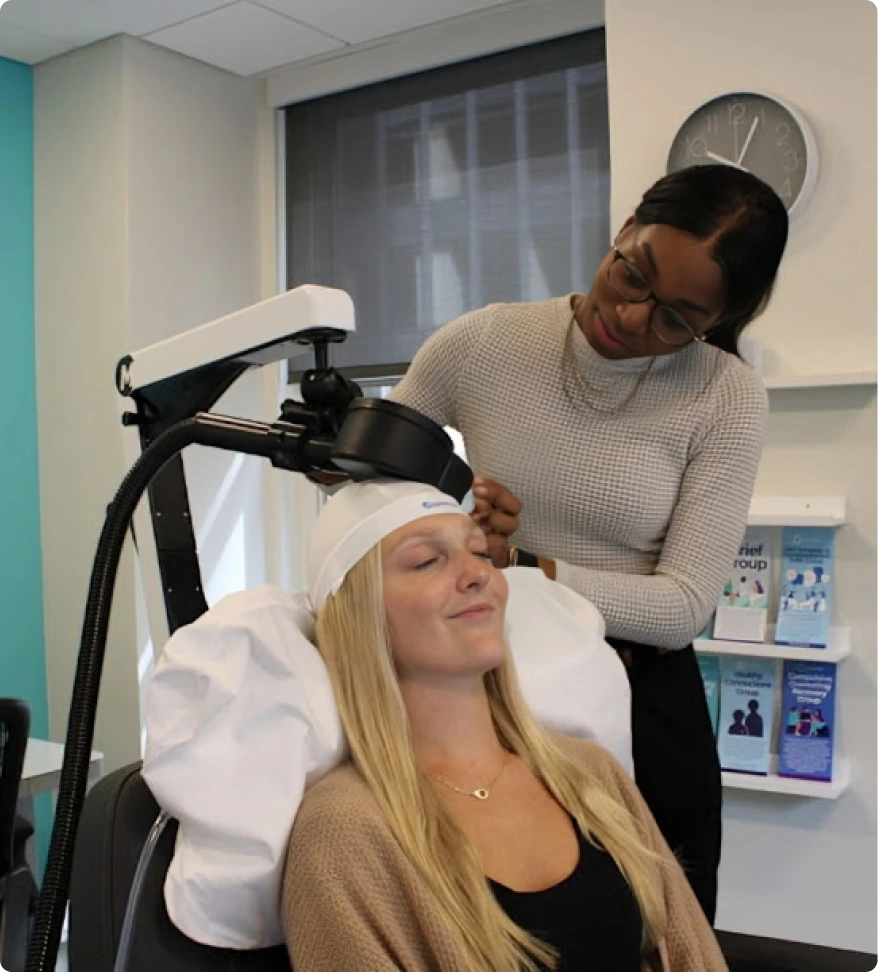
A TMS treatment session typically takes about 20-45 minutes, during which the patient is seated in a comfortable chair. The clinician places the coil on the scalp directly above the area of the brain to address symptoms associated with depression or OCD. During treatment, pulses of magnetic energy are slowly passed through the coil and penetrate just below the surface of the skull. The pulses stimulate neurons in the targeted area of the brain, helping to reduce symptoms associated with depression or OCD.
TMS can address mental health conditions that have been resistant to antidepressant medications. This therapy is administered by certified medical professionals with appropriate training and qualifications. TMS has been proven safe, well tolerated, and relatively free of side effects.
Find a Qualified TMS Provider With TMS Therapy Near Me
It is important to seek competent expertise when considering this treatment as part of an overall plan for managing mental health. With appropriate physician oversight, TMS could be a very effective therapy that can help those struggling with depression achieve a better quality of life. Find a provider near you today!