

Frame 11
Group 2
Group 3

TMS for Eating Disorders:
A Non-Invasive Path to
Neurological Balance

Transcranial magnetic stimulation (TMS) therapy has emerged as a promising treatment option for individuals struggling with depression and other mental health conditions that have not responded to traditional approaches. As more patients consider this non-invasive alternative, one of the most common questions that arises is about the financial investment required. Understanding the cost of TMS therapy involves navigating a complex landscape of insurance coverage, treatment protocols, and regional pricing variations — factors that can significantly impact the overall expense for people seeking relief through this innovative treatment method.

Our online directory includes qualified TMS providers in your area, which could be a key to finding personalized support and relief.

TMS for Eating Disorders: A Non-Invasive Path to Neurological Balance

Transcranial magnetic stimulation (TMS) is a non-invasive treatment option that can help individuals struggling with conditions like anorexia, bulimia, or binge-eating disorder. Many patients seek TMS because traditional therapies – such as talk therapy or medication – haven’t fully addressed persistent symptoms like compulsive behaviors, intrusive thoughts about food, or intense anxiety around eating. TMS targets specific brain regions involved in mood regulation, impulse control, and reward processing, offering a promising path for those looking to regain balance and improve their relationship with food.

Our online directory includes qualified TMS providers in your area, which could be a key to finding personalized support and relief.

What Is TMS?

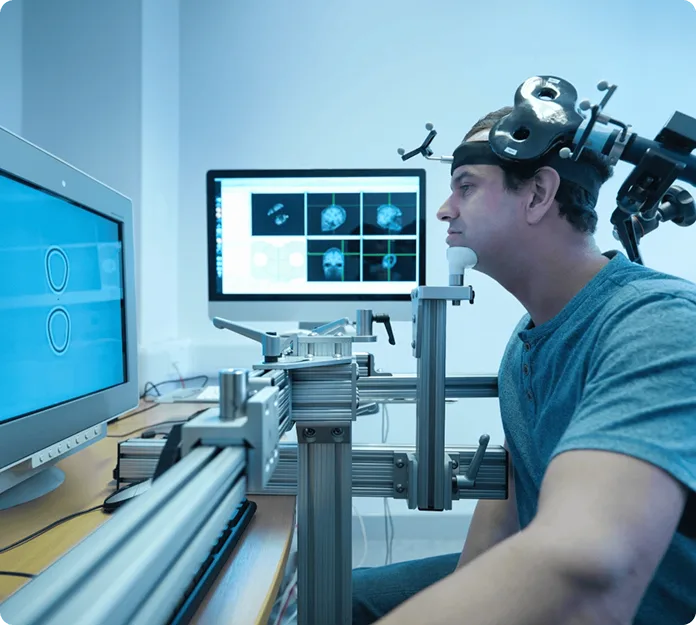
TMS is a non-invasive therapy that uses magnetic pulses to stimulate specific areas of the brain. It is designed to influence neural activity in regions involved in mood, behavior, and impulse control. TMS is FDA-cleared for certain mental health conditions and is increasingly being explored as a treatment for eating disorders.
Eating Disorders Addressed by TMS

Anorexia nervosa is characterized by extreme restriction of food, an intense fear of gaining weight, and a distorted body image. Patients often struggle with persistent thoughts about calories, weight, and control over eating, which can be difficult to manage through traditional therapy alone. TMS targets brain regions involved in mood regulation and impulse control, helping some individuals reduce anxiety around food and improve overall emotional balance.

Bulimia nervosa involves cycles of overeating followed by compensatory behaviors, such as self-induced vomiting, excessive exercise, or misuse of laxatives. Those affected often feel trapped by urges related to food intake and struggle with shame or guilt after binge episodes. TMS therapy may help by modulating brain activity associated with impulse control, reward processing, and emotional regulation, providing support alongside psychotherapy and nutritional guidance.

According to the National Eating Disorders Association, binge-eating disorder is marked by recurrent binge-eating episodes without regular compensatory behaviors. Individuals often experience feelings of loss of control, guilt, and distress after these episodes, which can significantly impact mental and physical health. TMS may offer relief by targeting brain circuits involved in craving, self-control, and mood regulation, helping patients gain more stability and reduce the frequency of binge-eating episodes.

What to Expect During Your TMS Appointments

The process begins with an initial consultation to determine whether TMS is an appropriate option for you. During this appointment, the provider reviews your medical history, current eating disorder symptoms, and prior treatments, and explains how TMS works and what outcomes to expect. This step ensures the treatment plan aligns with your individual needs and overall care goals.
A focused Eating Disorder Examination (EDE) helps clinicians better understand the neurological and behavioral factors influencing symptoms, including those seen in sub-clinical eating disorders. Providers may reference research on resting-state functional connectivity and findings from functional magnetic resonance imaging (fMRI) studies to inform protocol selection, even though fMRI is not typically performed during treatment. This neuroscience-based framework supports a more personalized approach to addressing eating disorder symptoms.
Before your first session, the provider identifies the specific brain area to target and determines the appropriate stimulation settings. You’ll be seated comfortably, and no anesthesia or sedation is required. Preparation is minimal, allowing most patients to return to daily activities immediately after each session.
During treatment, a magnetic coil is placed gently against your scalp to deliver focused magnetic pulses to targeted brain regions. Sessions typically last 3–40 minutes and are performed daily over a multi-week period. Patients remain awake and alert, and many describe the sensation as a light tapping on the head.
Throughout the course of treatment, providers monitor progress and side effects, making adjustments as needed to optimize results. Regular check-ins help track changes in mood, behavior, and eating-related thought patterns. This ensures the therapy remains responsive to how you’re feeling over time.

Aftercare & Side Effects

Aftercare following TMS therapy typically involves ongoing check-ins with your provider to monitor progress and address any concerns as your treatment concludes. Most side effects are mild and temporary, such as scalp discomfort or headache, and serious side effects are rare. Some patients notice changes in appetite or eating patterns during recovery, which may include concerns about weight gain or shifts in cravings toward tasty yet unhealthy foods. Providers emphasize continued support, nutrition guidance, and therapy to help patients navigate these changes in a healthy, balanced way.

Candidates for TMS for Eating Disorders

Candidates for TMS for eating disorders often include individuals who have not experienced sufficient improvement with traditional approaches, such as therapy, medication, or nutritional counseling. This includes people with treatment-resistant eating disorders who continue to struggle with intrusive thoughts, compulsive behaviors, or emotional regulation despite ongoing care. TMS may be considered as part of a comprehensive treatment plan, especially for patients seeking a non-invasive option that targets the brain circuits involved in eating behaviors and mood regulation.

Benefits of TMS for Eating Disorders

Cost of TMS for Eating
Disorders in the U.S.

The cost of TMS for eating disorders in the U.S. typically ranges from $100 to $300 per session without insurance, depending on the provider, location, and treatment protocol. While coverage for eating disorder treatment varies, many clinics offer flexible payment plans and transparent pricing to make care more accessible. As research expands and more providers offer TMS, this therapy is becoming increasingly affordable, giving patients more options to pursue brain-based treatment closer to home.

Address Your Eating Disorder with Professional TMS Treatments

For individuals struggling with complex eating disorders, including severe enduring anorexia nervosa, professional TMS treatments may support broader recovery goals when used as part of a comprehensive care plan. TMS can complement approaches such as cognitive behavioral therapy and concurrent antidepressant medication by targeting brain circuits involved in mood regulation, motivation, and decision-making. By helping reduce rigid thought patterns and emotional distress tied to weight and body image, TMS is increasingly viewed as an effective treatment that may support healthier outcomes over time under professional supervision.

Frequently Asked Questions (FAQ)

Yes, a growing body of clinical research suggests TMS may be a promising treatment for certain eating disorders. While large-scale evidence is still emerging, several randomized controlled trials have shown improvements in eating-related behaviors, mood regulation, and cognitive flexibility. These findings support continued investigation into TMS as an adjunct to established therapies.
TMS is a non-invasive therapy that uses magnetic pulses applied outside the head, whereas deep-brain stimulation is a surgical procedure involving implanted electrodes. TMS influences brain activity by modulating neural signaling and cerebral blood flow in targeted regions without requiring surgery. This makes TMS a lower-risk option for many patients.
The most commonly used form is repetitive transcranial magnetic stimulation (rTMS), which delivers repeated pulses to specific brain areas during each rTMS treatment session. Other approaches include Deep TMS, which reaches broader and deeper brain structures, and theta burst stimulation (TBS), a shorter protocol designed to mimic natural brain rhythms. Providers select the method based on symptoms, diagnosis, and treatment goals.
TMS may be especially relevant for individuals with eating disorders who also experience co-occurring mental health disorders. It is FDA-cleared for major depressive disorder (MDD) and has been shown to improve scores on measures like the Hamilton Depression Rating Scale. Research also supports its use in conditions such as obsessive-compulsive disorder (OCD), where improvements in cognitive control may reduce rigid thought patterns, as well as anxiety symptoms seen in posttraumatic stress disorder (PTSD) and bipolar disorder.
The dorsolateral prefrontal cortex plays a key role in emotional regulation, decision-making, and impulse control, all of which are often disrupted in eating disorders. Targeting this region has been associated with reductions in depressive symptoms and improvements in cognitive flexibility. Its selection is supported by findings from studies, including a randomised controlled feasibility trial examining brain-based interventions for complex psychiatric conditions.