



TMS Therapy
for OCD
Transcranial magnetic stimulation (TMS) is one of the most promising FDA-approved treatments for patients experiencing obsessive-compulsive disorder (OCD). It is painless, does not require medication, and provides impressive results. This non-invasive therapy uses electromagnetic fields to stimulate nerve cells in the brain that are involved in OCD. During a TMS session, a magnetic coil is placed against the scalp near the forehead to deliver pulses that target brain regions that are underactive in OCD. Treatment may last 3-40 minutes, depending on the technique.
The magnetic fields used in TMS therapy are carefully controlled and painless. Some patients report a mild tapping or knocking sensation from the pulses, which can be easily adjusted. TMS therapy does not require any anesthesia, recovery period, or sedation. This is a highly effective, convenient, and affordable option for reducing OCD symptoms and restoring mental wellness. TMS providers in our directory have undergone comprehensive training and are always happy to meet new patients and improve their quality of life!
Table Of Contents
Table Of Contents
OCD Symptoms
Obsessive-compulsive disorder is a common mental health condition characterized by intrusive, anxious thoughts and repetitive behaviors. People with OCD experience a range of symptoms that can significantly interfere with daily functioning. These include:
- Obsessions: Recurrent and persistent thoughts, images, or urges that the person experiences as intrusive and unwanted. Common obsessions relate to contamination, doubts, order/symmetry, or taboo thoughts.
- Compulsions: Repetitive behaviors that the person feels driven to perform in response to an obsession. Common compulsions include excessive washing and cleaning, ordering and arranging things, and counting.
- Rituals: These are routines the patient feels they must carry out according to specific rules or something negative will happen. Rituals are frequently associated with obsessions and compulsions.
- Mental acts: Non-physical activities the person may feel compelled to carry out, such as counting, repeating words silently, or "neutralizing" obsessive thoughts by thinking a specific phrase.
- Avoidance: Staying away from situations, places, objects, or thoughts that trigger obsessions and compulsions. The person may realize the avoidance is excessive but still feel unable to control it.

OCD Quiz
TMS Techniques for Treating OCD
- Repetitive Transcranial Magnetic Stimulation (rTMS)
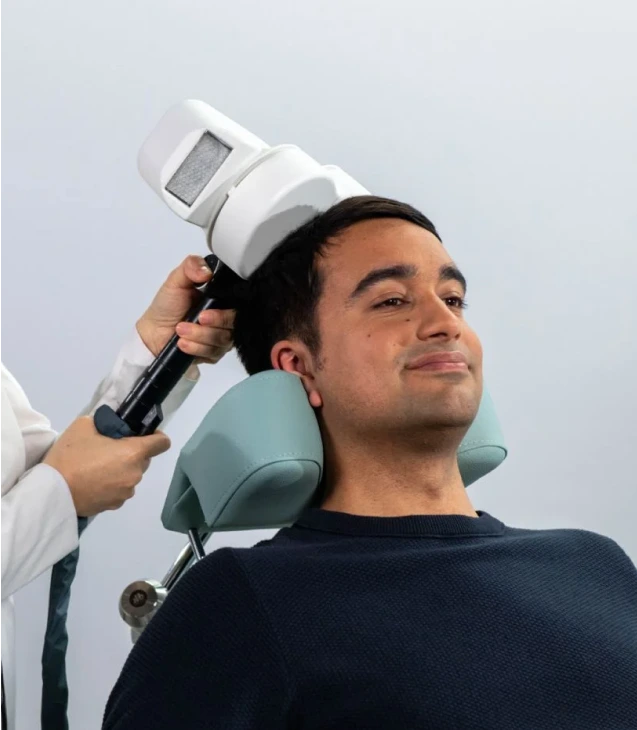
rTMS involves applying repetitive magnetic pulses to the brain to stimulate or inhibit neural activity in specific areas. For OCD treatment, this technique is typically used to reduce overactivity in the orbitofrontal cortex or increase the responsiveness of the dorsolateral prefrontal cortex. rTMS with H7 coil has been cleared by the FDA as an adjunct treatment for adult patients with OCD. Many studies have demonstrated that this technique alleviates symptoms and improves mental wellness.
- Deep Transcranial Magnetic Stimulation (dTMS)
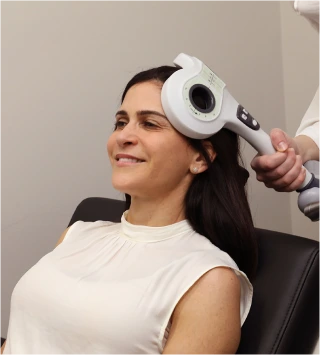
Deep TMS treatment uses special coils to allow deeper penetration and stimulation of subcortical regions of the brain compared to standard rTMS. For OCD, dTMS targets overactive circuits involving the striatum and thalamus to module neural activity. Several devices, such as BrainsWay’s Deep TMS™ and MagVenture’s Cool D-B80 coil, have been FDA-approved as an adjunct treatment for OCD, including cases where a major depressive disorder accompanies it. Research shows that 38% of patients receiving dTMS therapy had at least a 30% decrease in the Yale-Brown Obsessive-Compulsive Scale (YBOCS) score, compared with 11% of patients who received sham treatment.
- Theta Burst Stimulation (TBS)
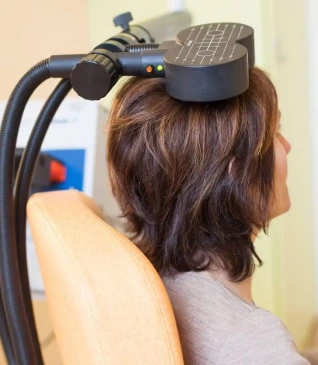
Theta burst stimulation (TBS) is a patterned form of rTMS that applies bursts of high-frequency magnetic pulses. For OCD, continuous TBS is used to inhibit cortical regions that are abnormally overactive. Studies show that 5 days of TBS sessions significantly improve symptoms in OCD patients. Clinical practice confirms these findings. Providers listed in our database have had great success using this protocol to alleviate OCD and help thousands of people enhance their mental well-being.
Preparation for TMS Therapy for OCD
Before beginning TMS therapy for OCD, a full consultation and evaluation are conducted, including the use of standardized assessment tools, such as the YBOCS and Obsessive-Compulsive Inventory-Revised. These instruments help the TMS practitioner to evaluate the severity of obsessive and compulsive symptoms. The consultation involves a review of the patient’s condition, past treatments, and medication history. Practitioners also explain what to expect from TMS sessions.
- Brain Mapping
After the initial assessment, the patient’s scalp is mapped. This is usually done by determining the motor threshold, which helps locate the target brain area and calibrate the stimulation intensity. Some TMS technicians use neuronavigation involving MRI imaging to map a person’s brain anatomy, helping to pinpoint the motor cortex precisely and enhance TMS targeting accuracy. Before treatment sessions, patients should avoid caffeine, nicotine, and medications that lower the seizure threshold.
- Provocation Design
There is also a one-time session where the TMS practitioner designs individualized provocations based on the patient’s OCD symptoms. This step is crucial to address the underlying causes of discomfort. Before each session, the patient is exposed to this provocation, followed by a TMS treatment.

TMS Procedure
- Assessments
Progress is evaluated at the beginning of the entire TMS therapy and after each week. TMS practitioners and technicians usually use YBOCS to measure OCD symptoms. Once the treatment course is complete, follow-up assessments are scheduled to track the patient’s improvement over the next several months. Additional TMS booster sessions may be delivered if needed.

- Coil Positioning
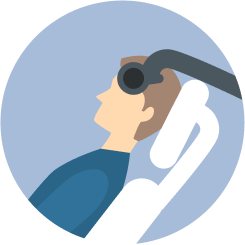
The first step is to position a TMS coil over the patient’s anterior cingulate cortex, located 4 cm in front of a foot motor cortex on the left side of the head. This is the area of the brain targeted for stimulation in OCD treatment. A mechanical arm or stand holds the coil in place.
- Treatment Sessions
The length and intensity of treatment sessions depend on the treatment protocol. Here are some examples:
- The standard OCD protocol in NeuroStar devices involves delivering 2,000 pulses over 18-minute daily sessions. The stimulation intensity is 100% of the person’s motor threshold. Patients undergo these daily treatment sessions five times weekly over 6 weeks.
- BrainsWay’s Deep TMS™ protocol for OCD involves 30-40-minute daily meetings that consist of a provocation (first part) and an 18-minute TMS treatment (second part). Such sessions are conducted five days a week, and the entire course takes 6 weeks. Deep TMS is a new, promising technique that helps many patients alleviate their OCD symptoms.
- Monitoring Side Effects
The TMS technician monitors for potential side effects throughout the procedures. These may include headaches, scalp discomfort in the target area, or dizziness. If side effects occur, the brain stimulation intensity will be adjusted.

- Coil Positioning
The first step is to position a TMS coil over the patient’s anterior cingulate cortex, located 4 cm in front of a foot motor cortex on the left side of the head. This is the area of the brain targeted for stimulation in OCD treatment. A mechanical arm or stand holds the coil in place.
- Treatment Sessions
The length and intensity of treatment sessions depend on the treatment protocol. Here are some examples:
- The standard OCD protocol in NeuroStar devices involves delivering 2,000 pulses over 18-minute daily sessions. The stimulation intensity is 100% of the person’s motor threshold. Patients undergo these daily treatment sessions five times weekly over 6 weeks.
- BrainsWay’s Deep TMS™ protocol for OCD involves 30-40-minute daily meetings that consist of a provocation (first part) and an 18-minute TMS treatment (second part). Such sessions are conducted five days a week, and the entire course takes 6 weeks. Deep TMS is a new, promising technique that helps many patients alleviate their OCD symptoms.
- Monitoring Side Effects
The TMS technician monitors for potential side effects throughout the procedures. These may include headaches, scalp discomfort in the target area, or dizziness. If side effects occur, the brain stimulation intensity will be adjusted.
- Assessments
Progress is evaluated at the beginning of the entire TMS therapy and after each week. TMS practitioners and technicians usually use YBOCS to measure OCD symptoms. Once the treatment course is complete, follow-up assessments are scheduled to track the patient’s improvement over the next several months. Additional TMS booster sessions may be delivered if needed.
What to Expect After TMS Therapy for Obsessive-Compulsive Disorder?
Recovery after TMS sessions for OCD is minimal, as the procedure is non-invasive and does not cause serious side effects, except for an extremely low probability of a seizure. Unlike treatments requiring anesthesia or sedation, TMS allows patients to remain awake and alert throughout therapy. Most people can resume daily activities, including driving, work, or social engagements, immediately after the procedure.
Some patients may experience mild scalp discomfort, headache, or facial muscle twitching during or shortly after the session. However, these effects are usually brief and subside on their own. Overall, the non-invasive nature and the absence of any lasting adverse reactions make TMS an appealing option for OCD treatment, providing symptom relief without a recovery period.
Candidates for TMS Therapy for OCD
Confirmed OCD Diagnosis
Candidates for TMS therapy must have a formal diagnosis of obsessive-compulsive disorder that meets the DMS-5 criteria. TMS practitioners usually use YBOCS to measure OCD symptom severity and select the best protocols to address them.
Inadequate Response to Traditional Therapies
Patients who have not experienced adequate relief from traditional therapies, such as medication and cognitive-behavioral therapy (CBT), may be eligible for TMS. Candidates have usually explored multiple treatments, often without sufficient reduction in symptoms, and are looking for an alternative approach that does not rely on medication. TMS can treat OCD safely and effectively.
Seeking a Non-Invasive Treatment
Individuals who prefer a non-invasive treatment for OCD or are unable to tolerate medication side effects often pursue TMS. This therapy does not require surgery, anesthesia, or systemic medications, making it an appealing option for those who wish to avoid invasive or pharmacological interventions.
Over 18 Years
FDA recommends TMS for individuals over the age of 18. Most providers follow these guidelines and, therefore, treat only adult patients. This age requirement is based on clinical psychiatric research and FDA approval criteria.
Medically Suitable for TMS
Candidates for TMS must also meet specific medical requirements to ensure the treatment is safe for them. Individuals with the following characteristics might not be eligible for TMS:
- Magnetic-sensitive metal implants in or near the head, located 10 cm (4 inches) or less from the TMS coil. This may include cochlear implants, plates, and screws.
- History of seizures or other specific medical conditions that increase seizure risks
- Active substance use
Candidates undergo an initial screening to confirm their medical suitability and safety for TMS therapy. Overall, this treatment is appropriate for the vast majority of patients. We highly recommend trying it to experience its healing effects.
Enhancing Medication Effectiveness
TMS therapy can be a complementary treatment for individuals who wish to enhance the effectiveness of their current medication. By combining TMS with prescribed medications, patients may experience better symptom management and improved outcomes. This approach can be especially beneficial for those seeking a multimodal treatment plan.

Benefits of TMS Therapy for OCD
TMS therapy has emerged as a promising option for individuals with OCD and other mental health disorders. It is especially beneficial for those who have not found relief through traditional treatments, like medication and psychotherapy. TMS provides the following advantages:
- Non-invasive and does not require surgery or anesthesia
- Safer than electroconvulsive therapy and deep brain stimulation
- No recovery time
- Well-tolerated with few side effects
- Clinically proven to reduce OCD symptoms in many individuals
- Offers a new option for patients resistant to traditional therapies
Non-invasive and does not require surgery or anesthesia
Safer than electroconvulsive therapy and deep brain stimulation
No recovery time
Well-tolerated with few side effects
Clinically proven to reduce OCD symptoms in many individuals
Offers a new option for patients resistant to traditional therapies
Cost of TMS Therapy for OCD
The cost of TMS therapy for OCD ranges from $150 to $300 per treatment session without insurance coverage. An entire course typically requires 20-30 meetings over 4-6 weeks. Many health insurance plans cover 30-100% of the TMS therapy costs. Therefore, it can be a very affordable treatment that provides significant symptom relief.
We recommend discussing insurance coverage and payment options with the TMS provider to understand the cost you will incur. Many clinics offer flexible financing plans or discounted rates. Our extensive database will help you select the best providers with the most favorable conditions for your needs.
A Comprehensive Directory for TMS Therapy
If you’re looking for an OCD mental health specialist in your area, look no further. Our directory connects patients like you with trusted TMS therapy providers specializing in this condition. We simplify the process of finding local professionals who understand the unique challenges of OCD and can offer effective treatment.
Don’t let OCD hold you back from living a fulfilling life. Take the first step towards recovery by exploring our directory and connecting with TMS practitioners who can provide the support and therapy you need. TMS is an exciting new option that has helped millions of patients restore their mental wellness and enjoy their lives to the fullest.