



TMS Therapy for Depression

What Is TMS Therapy
for Depression?
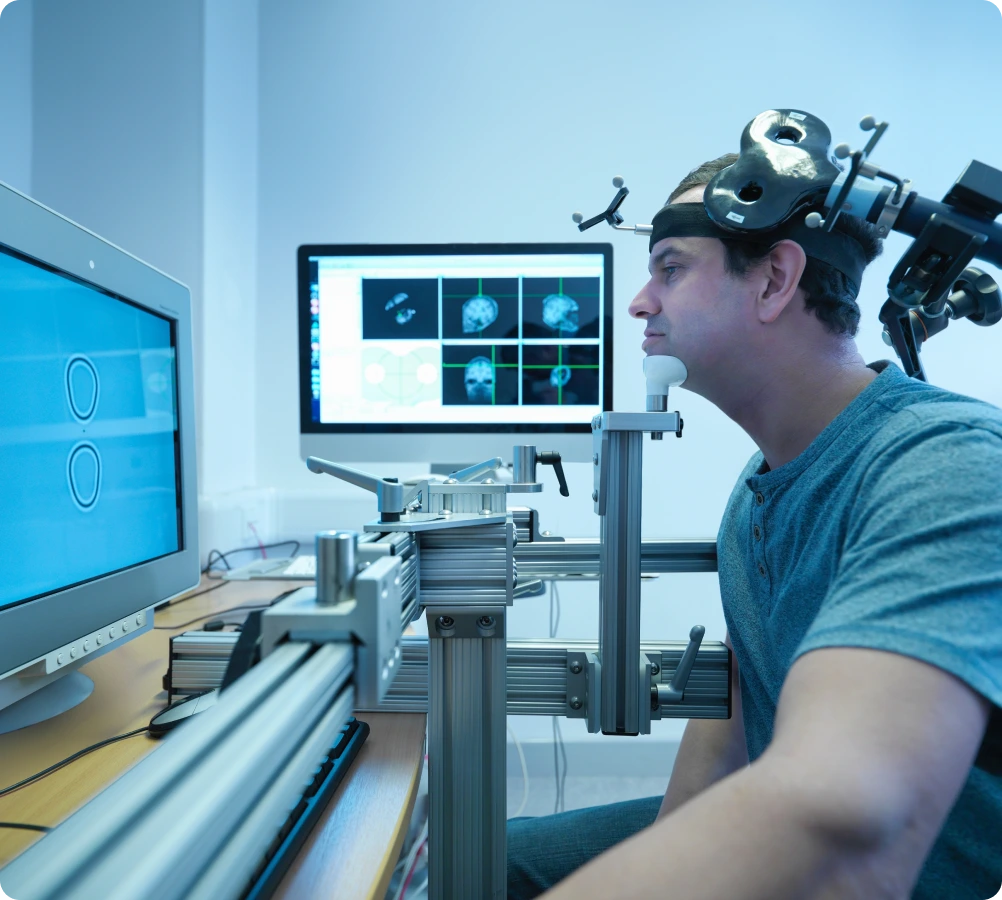
Transcranial magnetic stimulation (TMS) therapy is a non-invasive, FDA-approved treatment for major depressive disorder that uses electromagnetic pulses to stimulate nerve cells involved in mood regulation. During this procedure, a therapist places a magnetic coil against the patient’s scalp near the forehead and delivers precise signals in a repetitive, painless manner.
Depression Quiz
Types of Transcranial Magnetic Stimulation
Repetitive Transcranial Magnetic Stimulation (rTMS)
Theta Burst Stimulation (TBS)
Deep Transcranial Magnetic Stimulation (dTMS)
fMRI-guided TMS
TMS Therapy for Depression: Step-by-Step

Initial Assessment

Mapping the Treatment Area

Coil Positioning

Magnetic Pulse Delivery

Monitoring and Adjustments

Session Completion

Treatment Course
Recovery After TMS Therapy for Depression

Side Effects
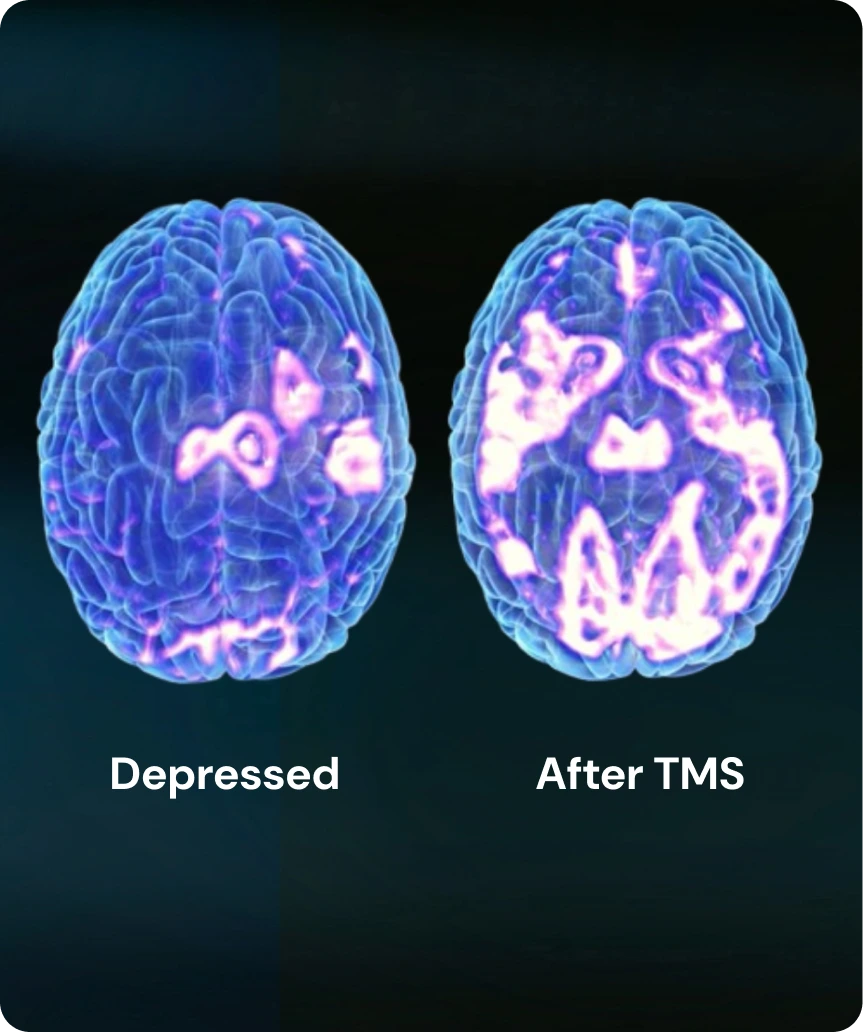
Results
Long-Term Maintenance
Candidates for TMS Therapy for Depression
Failed Medication Treatment
People who have failed to achieve remission after trying several antidepressant medications are the main candidates... for TMS therapy. Our treatment can address the problem and help achieve mental wellness.
Read moreUnable to Tolerate Medication Side Effects
Some people are unable to tolerate the side effects of antidepressant medications, even after trying several different drugs.... They can benefit from brain stimulation, which is much milder than SSRIs and antipsychotics. TMS therapy is a non-invasive treatment without significant complications. Patients may only experience mild headaches initially, but they gradually disappear.
Read moreWant to Avoid
Drugs
Want to Avoid Drugs
Some people prefer to avoid psychiatric medication if possible. This category of patients is less common, yet they may... still benefit from brain stimulation. TMS therapy can be an excellent option for such patients because it does not involve taking any pills or substances.
Read morePregnant Women With Depression
Women dealing with prenatal or postpartum depression have limited treatment options, as many antidepressant... drugs pose risks during pregnancy and breastfeeding. For these patients with special contraindications, TMS offers a drug-free approach to managing their mental health that can be safer for mom and baby. We recommend discussing this issue with a therapist to determine the most suitable treatment protocol.
Read moreContraindications
- Metal implants in or near the head (except for standard amalgam dental fillings). The magnetic field used in TMS may cause implants to move or heat up.
- History of seizures or epilepsy. TMS can potentially induce seizures in susceptible patients.
- Intracranial vascular clips or coils. The magnetic field can cause torque or movement of metal implants.
Benefits of TMS Therapy for Depression
Improves mood
Non-invasive
Few side effects
No anesthesia
Works quickly
Can be done alongside medications and therapy
Outpatient procedure
Covered by insurance
Improves mood
Non-invasive
Few side effects
No anesthesia
Works quickly
Can be done alongside medications & therapy
Outpatient procedure
Covered by insurance
Cost of TMS Therapy
for Depression
Insurance Requirements
- a minimum duration of depressive symptoms
- a specific severity level of depression as measured by standardized assessment tools